May 2026 · Oak Cliff, TX
MCM Oak Cliff
Hillside Restoration
Scope
Native Hillside Restoration
Location
Oak Cliff, TX
Year
In Progress
Approach
Ecology-led Design
A rocky slope reimagined as a native hillside garden.
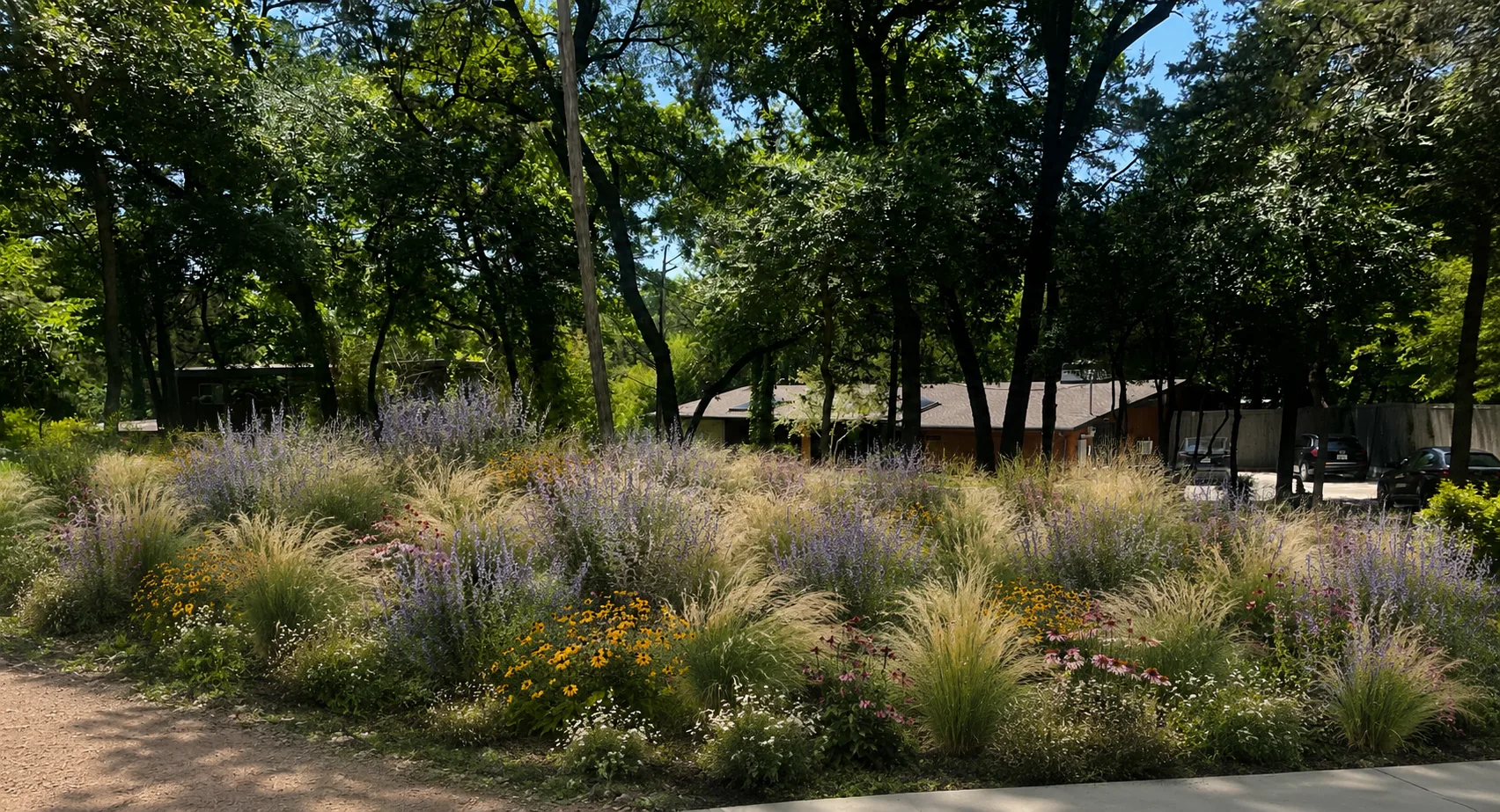
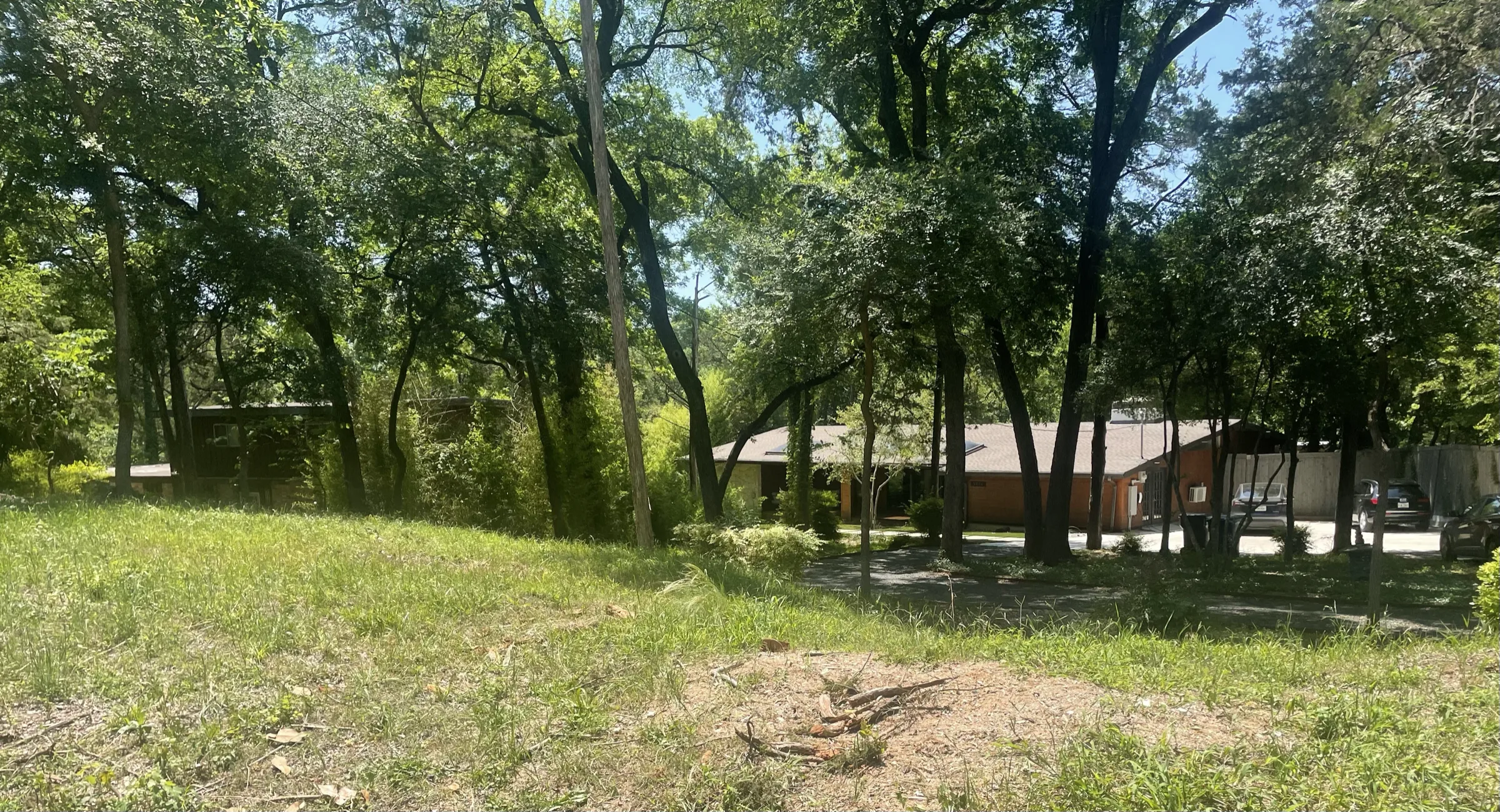
What began as a difficult, uneven construction-grade slope became an opportunity to create something softer, ecological, and deeply tied to the character of the neighborhood. The site sat above the street with exposed rock, patchy grass, erosion issues, and little visual structure. Rather than fight the hill, we designed with it — using layered planting, natural stone, and movement to turn the slope into part of the landscape experience itself.
The goal was not to create a manicured flower bed.
It was to create a hillside that felt like it belonged here.
Before
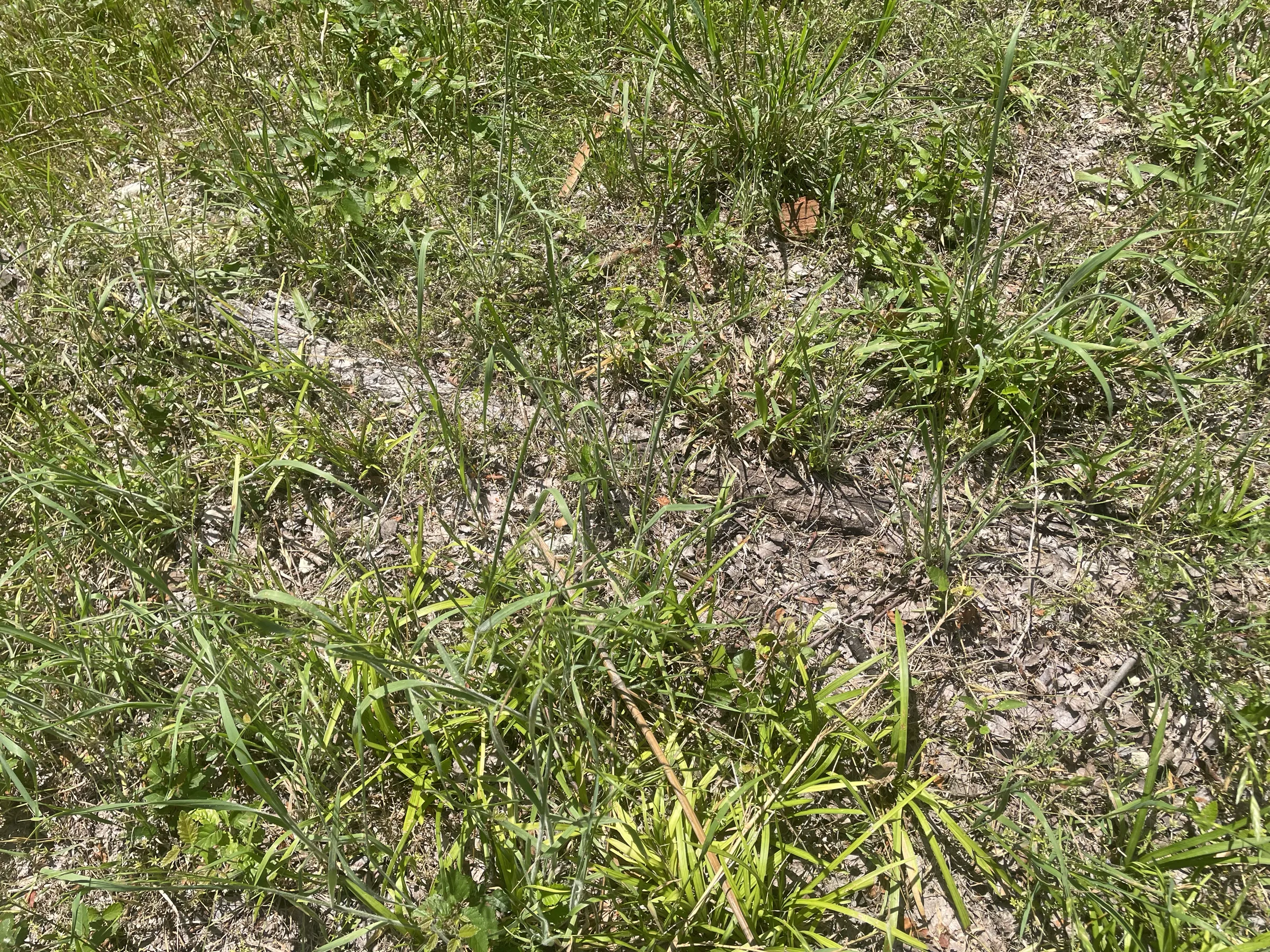
The original hill was sparse, rocky, and difficult to maintain. The grade changed abruptly from the driveway to the street, and exposed construction debris made planting difficult in several areas. Water runoff, heat, and poor soil conditions all shaped the design approach from the beginning.
Rather than flattening the site or installing a traditional retaining wall, we chose to preserve the natural contours of the hill and use planting density, layered textures, and selective stonework to stabilize and define the space.
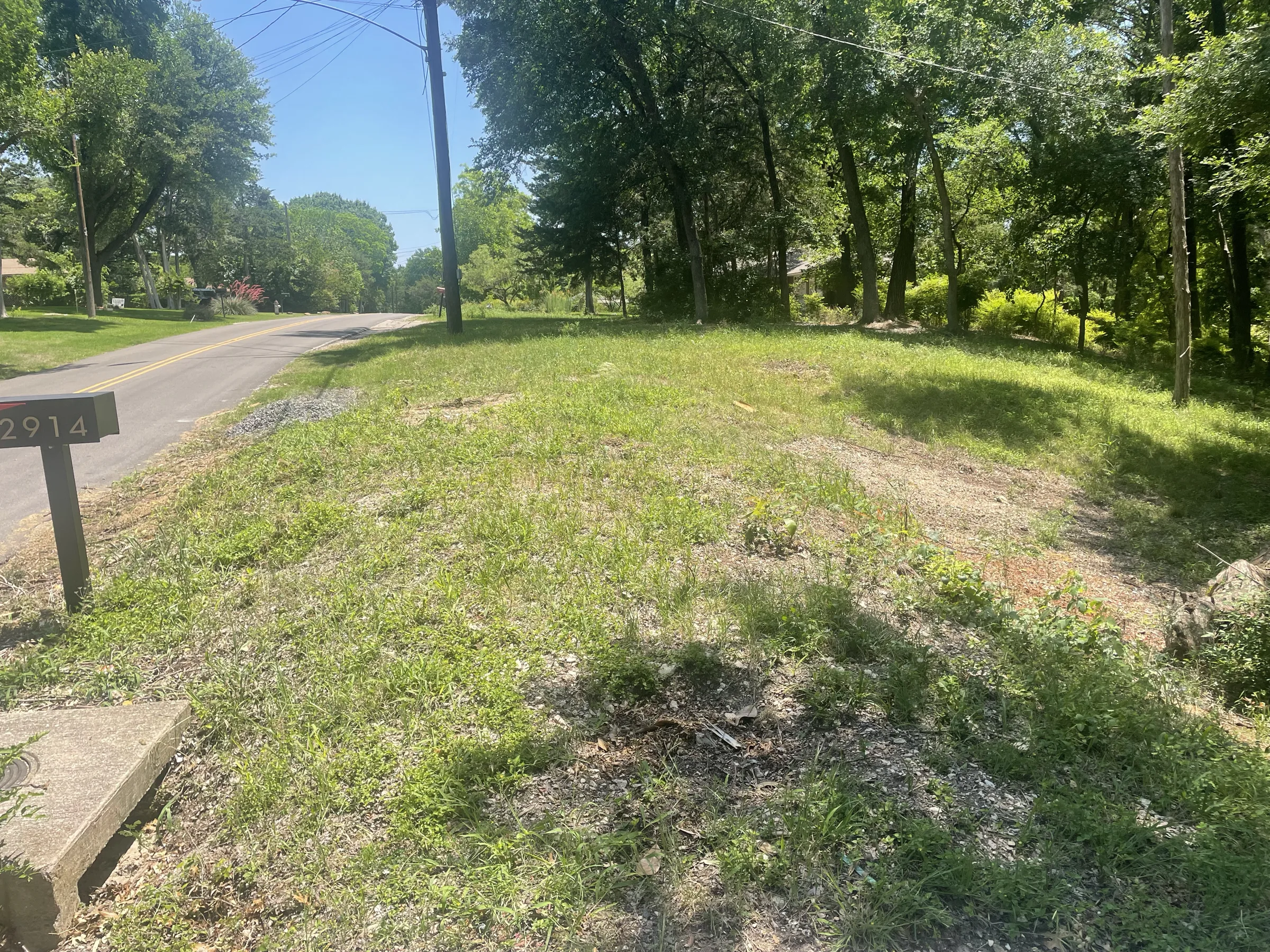
The slope from the side — grade changes and erosion visible at street level
The Transformation
The Transformation
Design Approach
We approached the hillside almost like a natural prairie edge layered into a residential setting. The planting strategy focused on three things: movement, seasonal texture, and ecological resilience.
The hill needed structure without becoming rigid or overly formal. To accomplish this, we used sweeping masses of ornamental grasses and repeated planting drifts that soften the slope visually while helping unify the entire composition.
Curved pathways and stepping stones were introduced to give the hill rhythm and accessibility without interrupting its natural flow.
Natural limestone boulders create low retaining edges and subtle terraces that stabilize portions of the slope while still feeling organic to the site. We intentionally avoided rigid retaining-wall geometry in favor of something looser and more integrated with the landscape.
Before planting began, we developed a series of rough overlays and conceptual sketches to study sight lines from the street, planting density, seasonal color balance, drainage, and how the hill would feel from multiple viewing angles.
From Sketch to Ground
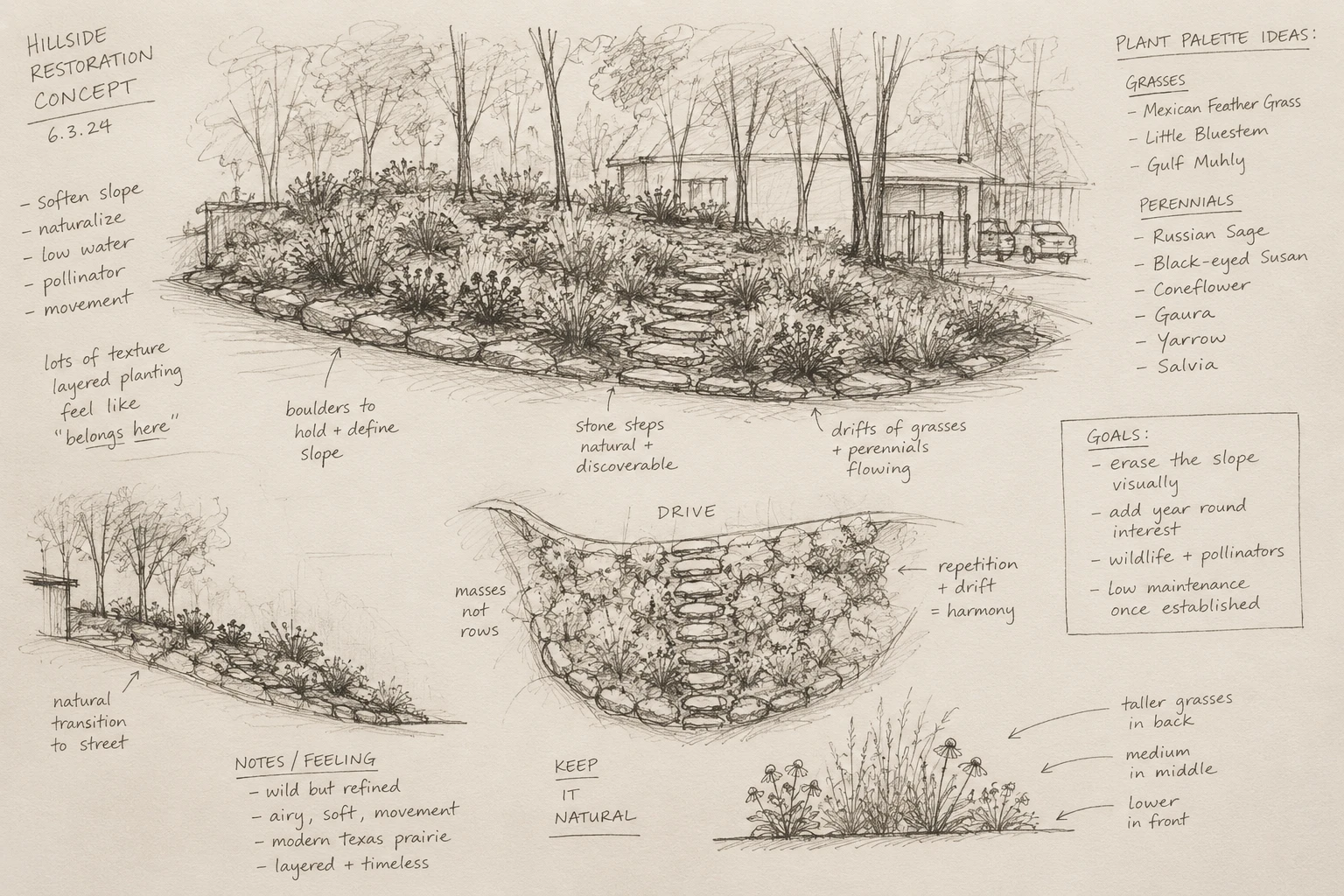
Initial concept sketch — June 2024
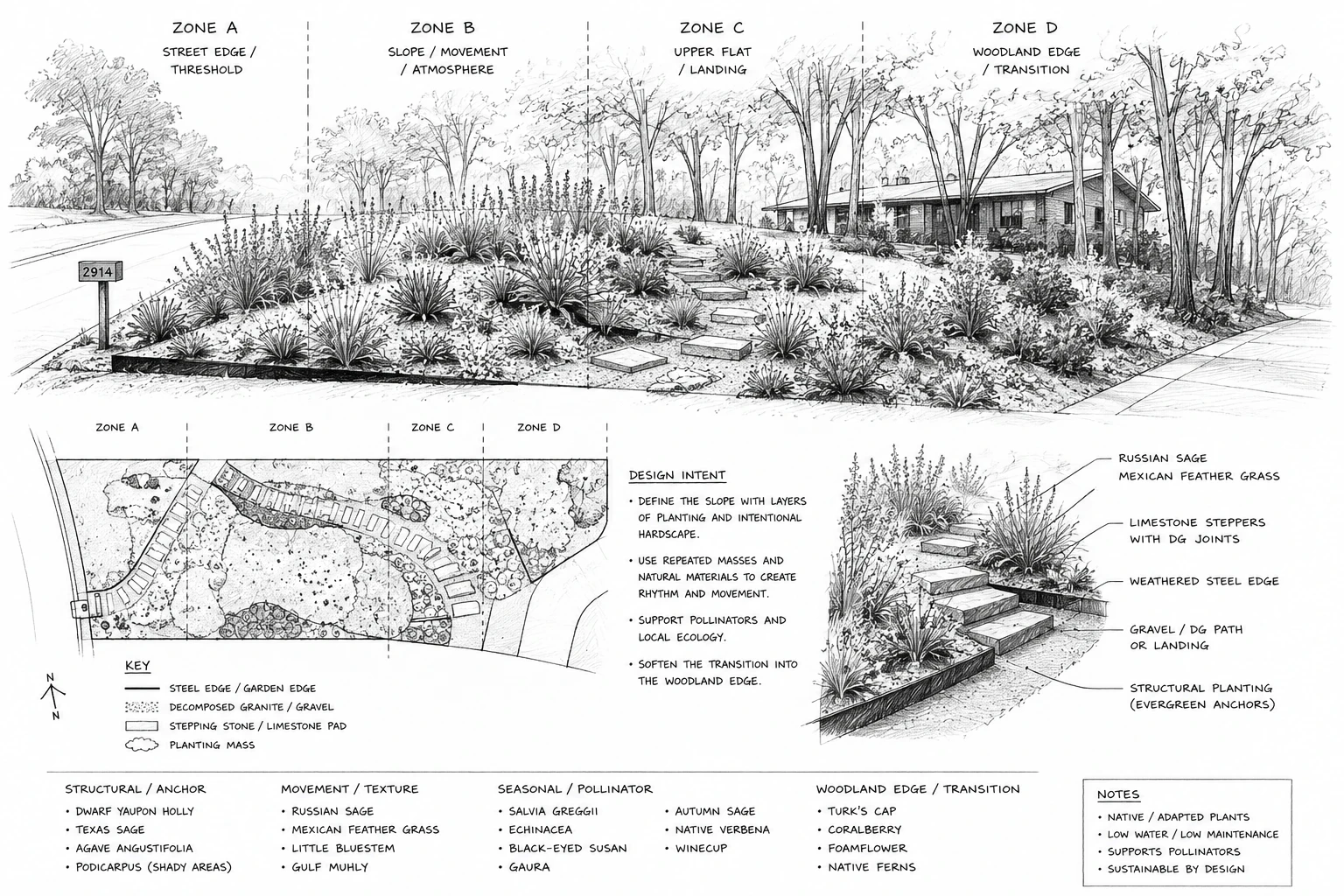
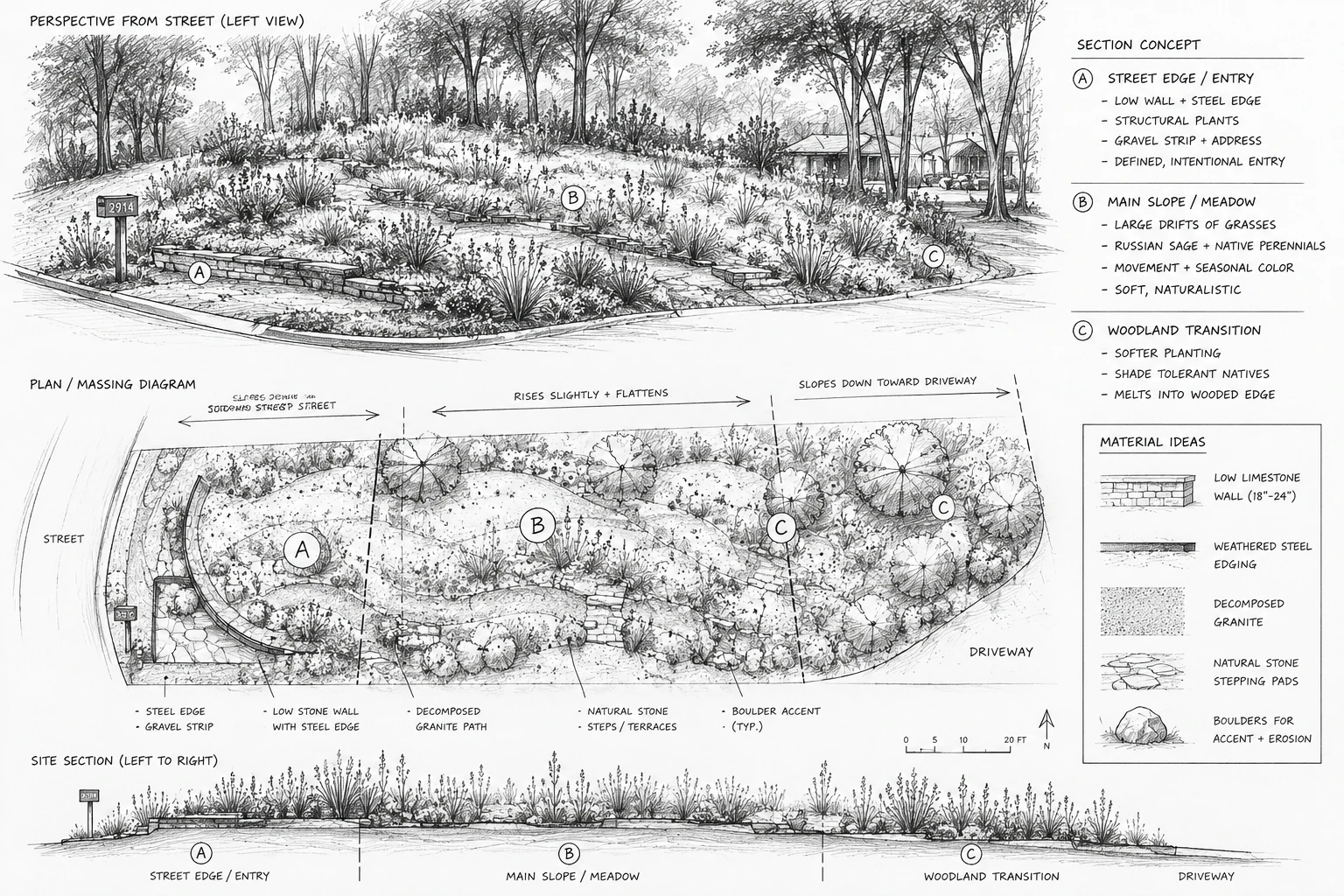
Formal planting diagrams — zones, materials, and species palette
Why These Plants
Mexican Feather Grass
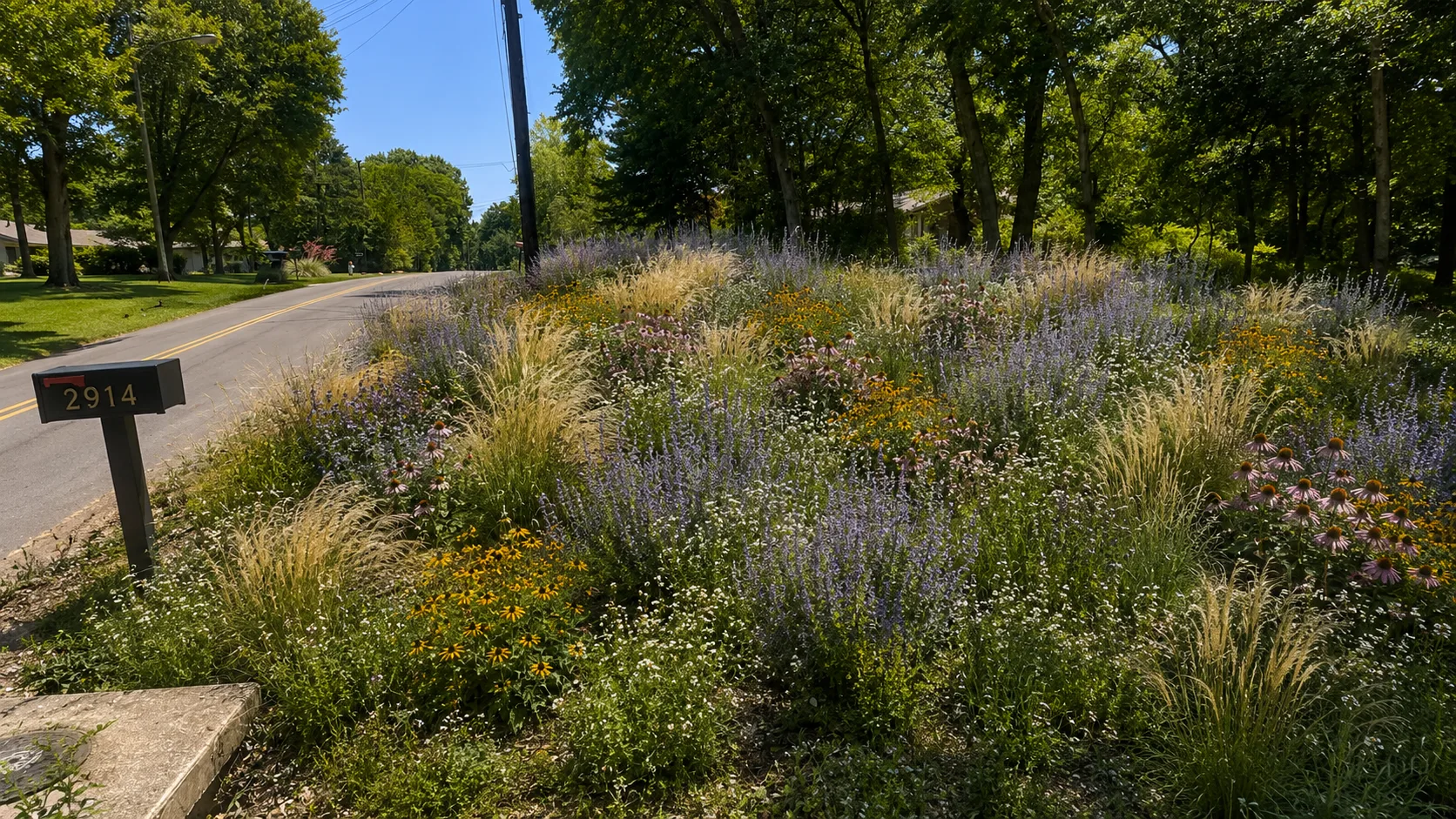
Mexican feather grass creates much of the motion across the hill. In the wind, it softens the entire landscape and gives the slope a light, almost atmospheric quality. Because the blades are fine and semi-transparent, they help blend larger planting masses together rather than creating hard visual edges. We used it in repeated drifts throughout the hillside so the eye continuously moves across the space.
Russian Sage
Russian sage provides the cool lavender haze visible throughout the planting palette. Its silvery foliage handles heat extremely well, and the vertical flower spikes create contrast against the softer grasses. More importantly, it blooms for a long period and supports pollinators throughout the season. The combination of Russian sage and feather grass became the emotional centerpiece of the project — movement layered against structure.
Black-Eyed Susans
Black-eyed Susans were used intentionally as moments of warmth and visual punctuation. Because the grasses and sage create soft, airy textures, the yellow blooms help anchor the composition and keep it from becoming visually washed out. Their bright color also makes the landscape feel alive from the street even at a distance.
Coneflowers & Native Perennials
Coneflowers and other native flowering perennials were layered throughout the hill to extend seasonal interest and support biodiversity. Rather than planting in isolated clusters, we repeated smaller groupings across the site so the landscape feels woven together naturally over time.
Sustainability & Ecology
This project was designed around long-term resilience rather than short-term impact. By relying heavily on native and climate-adapted species, the hillside will require less intervention over time while becoming more dynamic and textured as the planting matures.
The planting palette emphasizes drought tolerance, pollinator support, reduced irrigation demand, layered root systems for soil stabilization, and seasonal adaptation to North Texas heat. What stabilizes the slope in year one becomes a self-sustaining ecosystem by year five.
The Result
The finished hill no longer feels like leftover space. It feels integrated into the architecture, the neighborhood, and the woodland character surrounding the property.
The goal was never perfection.
It was to create a landscape that feels alive.
Ready to grow something together?